Conservation Chat UK LTD
Company Number 12390719
27 Shorton Valley Road
Paignton
TQ3 1RB
Conservation Chat UK LTD
Company Number 12390719
27 Shorton Valley Road
Paignton
TQ3 1RB
Conservation Chat UK LTD
Company Number 12390719
27 Shorton Valley Road
Paignton
TQ3 1RB
.png)


Welcome to a different kind of conference
At Conservation Chat UK Ltd, we believe marine conservation events should be engaging, inclusive, and full of community spirit—not formal or intimidating.
The South West Marine Fest is a friendly, relaxed gathering where people from all walks of life can come together to celebrate our ocean, share research and stories, and connect over a shared passion for marine conservation—whether you're a seasoned professional or just starting out.
👉 Click here to view and download your conference programme!
What to expect
Join us for our annual in-person event dedicated to ocean conservation. Hosted by Conservation Chat UK Ltd, this gathering reflects our strong commitment to protecting marine life and ecosystems. We design our events to place the ocean and its incredible biodiversity at the centre—bringing people together through inspiring talks, shared knowledge, and a welcoming community that’s passionate about our blue planet.
A day of learning and connection
Inspiring talks by expert guest speakers
Engaging discussions on important conservation topics
Great networking with like-minded people
A welcoming space for everyone—students, professionals, and nature-lovers alike
CPD opportunity
This conference is a great Continuing Professional Development (CPD) opportunity.
Attendance certificates are available for anyone who would like to record their learning.
Practical info
Light refreshments provided
Please bring a packed lunch (we challenge you to go plastic-free!)
Affordable ticket prices to keep it accessible to all
Important to know
This is an in-person only event.
If the conference is cancelled by us, we’ll give you a full refund—no hassle.
👉 Click here to view details of the next South West Marine Fest Conference.


Laura Collier
Conservation Chat UK
Marine Conservation - A Year In Review.
This talk reviews the major developments in marine conservation from May 2025 to May 2026—the good, the bad, and the unmistakably urgent. It highlights the year’s most encouraging progress, from advances in habitat restoration to expansions of protected areas and promising policy shifts. It then explores the challenges that defined the period, including continued pressure on fisheries and climate-driven disruptions across key ecosystems. Finally, it confronts the most concerning trends: accelerating biodiversity declines, extreme marine heatwaves, and setbacks in regulatory protections. Together, these insights offer a clear picture of how the ocean has changed over the past year and what actions are most crucial as we look ahead.

Megan Ross
The Ocean Conservation Trust
This talk will provide a brief introduction to seagrass and its vital role in healthy marine ecosystems, setting the context for the Blue Meadows project led by the Ocean Conservation Trust. Following this overview, the focus will shift to what goes into effective advocacy and community engagement for seagrass protection and restoration. Drawing on real-world experience from Blue Meadows, the talk will explore how outreach, education, and collaboration with local communities and stakeholders help turn awareness into action. The session will highlight the challenges and opportunities of engaging diverse audiences and demonstrate how community-led advocacy plays a key role in supporting long-term seagrass recovery.

Mia Cartlidge
The Ocean Conservation Trust
Seagrass meadows have historically been the neglected heroes of our oceans, providing critical habitat for marine life, protecting coastlines and sequestering carbon. Marine heatwaves (MHWs) are periods of time, from days to months, where ocean temperatures become abnormally high, which causes marine organisms such as seagrass, to be pushed beyond its comfortable physiological limits. This study aims to investigate how heat-induced stress caused by fluctuating ocean temperatures such as marine heatwaves, impacts the health of the sub-tidal seagrass, Z. marina. This will be measured and analysed in an ex-situ environment, using chlorophyll fluorescence measurements of Fv/FM and ΦPSII values. This study would allow us to understand better the tolerance and barriers of temperature change that this seagrass can experience, before its photosynthetic ability becomes depleted, and whether the damage is a chronic impact or short-term functional responses.

Thea Taylor
Sussex Dolphin Project
Thea Taylor is a dedicated marine biologist and the Managing Director of the Sussex Dolphin Project. With a background in marine biology, Thea has built her career on understanding and protecting local cetacean populations. Her field experience spans from the Moray Firth in Scotland, where she worked as a research assistant and wildlife guide, to global projects studying cetacean distributions and population dynamics. Passionate about ecosystem restoration and community involvement, Thea champions citizen science initiatives that empower local people to help safeguard Sussex’s marine mammals and coastal habitats for future generations.

Coral Smith
Devon Wildlife Trust
Join Coral for a fascinating introduction to the Devon Marine Strandings Network (MSN), part of Devon Wildlife Trust.
This talk will cover:
-
An introduction to Devon Wildlife Trust and the Marine Strandings Network
-
A summary and analysis of Devon’s 2025 strandings data
-
Notable strandings from the year and key post-mortem findings
-
The incredible volunteer network that makes this vital work possible.
Discover how strandings data helps us understand the health of Devon’s marine environment — and how dedicated local volunteers play a crucial role in marine conservation.

Debbie Rolmanis
Nature's Safe
An exploration of Nature’s SAFE, preserving living cells to safeguard at-risk species and secure the future of global wildlife through advanced science.

The Lantern Network
Following a two-week knowledge exchange programme in Kerala, India, The Lantern Network, a collective of early-career marine researchers, reflect on how international collaboration can benefit marine conservation. The team delivered workshops, lectures, and hands-on training in data collection and analysis to an interdisciplinary audience of students, researchers, and local stakeholders. This talk shares their early findings and explores how partnerships between the international scientific community and local communities can support more effective, integrated approaches to protecting the ocean.

Aleksandra Ilieva Aleksandrova
Marine Conservation Society
Alex is a Masters student in Sustainable Development with a passion for ocean conservation and a focus on socially just marine conservation and governance.
She volunteers with the Marine Conservation Society, an environmental charity run by and for sea lovers, and will be happy to share more information and materials about their work during the day.
The charity is working toward a cleaner, better protected, healthier ocean: one we can all enjoy. Our main aims are to reduce ocean pollution, improve sustainable fishing, and protect marine habitats and wildlife. We do this through science, policy work, education, and community action. It’s all about creating a healthier ocean for people, wildlife, and future generations.


Jessica Churchill-Bissett
Marine Management Organisation
Marine non‑licensable activities (mNLA) — including recreational boating, paddle sports, anchoring, diving and wildlife watching are increasing in scale and diversity across England’s inshore Marine Protected Areas (MPAs). Although individually small‑scale, these activities can collectively hinder MPAs from achieving their conservation objectives, particularly where sensitive or irreplaceable habitats and mobile species are vulnerable to disturbance or physical damage. In response, the Marine Management Organisation (MMO) has developed a comprehensive assessment and management programme to ensure mNLA pressures do not prevent favourable or recovering condition of MPA features, contributing to statutory Environmental Improvement Plan targets for 2028 and 2042.
This presentation introduces the national mNLA project, outlining its evidence‑led, proportionate and adaptive approach. The programme spans varied work packages, beginning with screening and site‑level assessments across 97 inshore MPAs, supported by literature reviews, stakeholder engagement, and collaborative working through a cross‑agency mNLA Working Group. Management interventions will range from voluntary codes and education campaigns to statutory byelaws where necessary, with targeted workstreams on irreplaceable habitats, seagrass, marine wildlife disturbance (SeaSight), and commercial wildlife operators.
The project emphasises behaviour change, co‑design with local stakeholders, and improved intelligence through tools such as satellite surveys, AIS analysis, and the new SeaSight reporting platform. Monitoring and evaluation will underpin long‑term effectiveness, culminating in publication of a national mNLA Decision Document and Monitoring Plan in 2030.
This work represents the first integrated, national framework for managing public marine activities in MPAs. It demonstrates how regulators, communities and marine users can work together to protect vital marine ecosystems while enabling sustainable enjoyment of the marine environment.

Rebecca Dudley
University of Plymouth
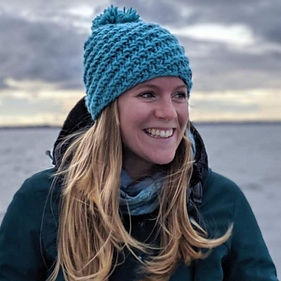
The bottlenose dolphins of England’s south coast are among the most vulnerable in Europe. These remarkable animals are part of a small, socially distinct population navigating one of the world's busiest marine environments. In this talk, researcher Rebecca Dudley explores what long-term monitoring and citizen science are revealing about their lives. Learn how collaborative science and local partnerships are shaping new conservation strategies to protect these iconic yet threatened coastal dolphins.
Rick Morris
MARINElife
This talk will give you an understanding into the work of MARINElife in collecting data from sightings information from our ship based surveys and project work with other like-minded organisations and includes images of some of the wildlife we have encountered.

Simon Thomas
The large pelagic sharks such as the blue shark (Prionace glauca), Porbeagle (Lamna nasus) and common thresher (Alopias vulpinus) have always been present around the SW of the UK, but numbers dwindled during the late 20th and early 21st centuries, reflecting the huge commercial pressure on shark stocks in the Atlantic basin.
However, during the mid 2010s, these amazing apex predators returned in large numbers, to areas where they had declined or even been absent for many years.
During this talk, Dr. Thomas will look at the migrations of these amazing sharks, what we still don’t know about, them, how their return correlates with both environmental and anthropogenic variables, and how working with fishermen has produced unique long-term data sets, which enable complex models to tease out complex changes in marine ecosystems.

Sarah Greenslade
The Seal Project
A journey into South Devon’s seals, exploring their identification, behaviour, and how dedicated year-round monitoring reveals their lives, movements, and welfare along the coastline.

Stu Collier
Conservation Chat UK
A dynamic introduction to a new and exciting project with Operation Cetacean, highlighting efforts to study harbour porpoises and other marine mammals in Torbay and deepen understanding of their conservation needs.

Chloe Nunn
Devon County Council
Coasts are home to people, wildlife, and habitats where the land meets the ocean, necessitating that ecology, conservation, commerce, recreation, leisure, transport, culture, tradition, and society co-exist together. Coordinating these activities and needs across governance boundaries requires robust partnerships based on trusting collaborations. Join the Exe Estuary Management Partnership Officer to learn about coastal partnerships in the south west, and the challenges and opportunities presented through local, regional, national, and international collaboration.

Aleksandra Ilieva Aleksandrova
Marine Conservation Society
Alex is a Masters student in Sustainable Development with a passion for ocean conservation and a focus on socially just marine conservation and governance.
She volunteers with the Marine Conservation Society, an environmental charity run by and for sea lovers, and will be happy to share more information and materials about their work during the day.
The charity is working toward a cleaner, better protected, healthier ocean: one we can all enjoy. Our main aims are to reduce ocean pollution, improve sustainable fishing, and protect marine habitats and wildlife. We do this through science, policy work, education, and community action. It’s all about creating a healthier ocean for people, wildlife, and future generations.
Organisations we've worked with
